
Having spent years working as an emergency responders — we see everything from accidents to heart attacks, but what sometimes catches us off guard are the quieter, less visible emergencies: the ones involving mental health. As the nights draw in and winter approaches, we hear more colleagues and members of the public talk about feeling “flat,” “drained,” or “just off.” Over time, we started to realise many of those voices were not just tiredness — they were signs of SAD.
Stress, unpredictable hours, long shifts — our jobs can already strain wellbeing. Add the darker, colder months and the drop-off in daylight, and SAD becomes more than just a “winter mood.” It’s real. It affects focus, energy, decision-making — things that matter when you’re responding to crisis.
WHAT IS SAD?
The NHS estimates approximately 2 million people in th UK suffer with Seasonal Affective Disorder (SAD). SAD is a type of depression that follows a seasonal pattern – meaning it tends to come and go at about the same time each year. Symptoms are usually more apparent during the winter months. However, some people experience symptoms during the summer.
SYMPTOMS OF SAD
- A persistent low mood
- Loss of interest in activities you usually enjoy
- Feeling lethargic – lacking energy, feeling sleepy during the day
- Changes to appetite: often cravings for carbohydrates, overeating and weight gain
- Trouble concentrating, feeling irritable, or unusually lethargic
- Feelings of worthlessness, despair, guilt
- Reduced libido
Typically, these symptoms usually begin in the autumn or early winter as daylight decreases and ease up again in spring or summer.
WHAT MAY CAUSE SAD?
No single cause has been confirmed — but experts point to a few strong suspects.
- Less sunlight & shorter days — our bodies use daylight as a signal for when to wake up, sleep, eat, be active. When daylight shrinks, it can disrupt that internal calendar (circadian rhythm).
- Brain chemical changes — possible shifts in levels of serotonin (which affects mood, appetite, sleep) and melatonin (which regulates sleep). Lower serotonin + higher melatonin may contribute to the low mood, lethargy, oversleeping typical of SAD.
- Genetic / individual vulnerability — some people seem more prone than others (e.g. family history, other mood disorders).
- Lifestyle and environment — less time outdoors, long indoor hours under artificial lights, lack of daylight exposure, and perhaps low vitamin D (from reduced sun exposure) might play roles.
WHY SAD MATTERS FOR MENTAL HEALTH
SAD isn’t just about “feeling a bit blue” when the nights get longer. For some, it’s genuinely debilitating — it affects day-to-day functioning, relationships, work (including shift work) and overall quality of life.
Because it’s tied to seasons, some people might dismiss it as “just winter being rubbish.” But underneath, there are real biological changes — shifts in the balance of brain chemicals, disruption to circadian rhythms (your internal clock), sleep patterns, appetite, motivation.
If left untreated, SAD can exacerbate other mental health issues — and for some people lead to worsening depression, anxiety, and even suicidal thoughts.
That’s why for us, as emergency responders, raising awareness about SAD feels vital. Because the “invisible patients” — those suffering inside — need recognition just as much as accidents or injuries.
WHEN SHOULD YOU THINK ABOUT SEEING A GP?
If you notice a pattern over autumn/winter: feeling persistently down for days or weeks, losing interest in things you usually enjoy, sleeping or eating more (or less), struggling to get out of bed, lacking energy, or feeling hopeless — and it starts year after year — that’s a strong signal it could be SAD.
A GP can help with an assessment: they’ll ask about your mood, sleep, lifestyle, seasonal changes to behaviour or appetite — and whether this has a recurring pattern over years.
If SAD is confirmed, there are effective treatments (or at least management strategies): light therapy (special lamps or light-boxes), lifestyle changes, talking therapies or, in some cases, medication.
MIND is a useful resource for further information: https://www.mind.org.uk/information-support/types-of-mental-health-problems/seasonal-affective-disorder-sad/
TIPS FOR SELF-HELP
Refer to our Self-Help Guide: 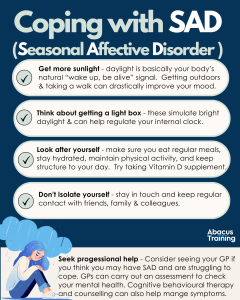
FINAL THOUGHTS
It’s easy — especially in emergency services — to focus on the “visible emergencies.” But mental health emergencies don’t always come with sirens. For many, the biggest threat comes quietly: reduced energy, mounting gloom, a shrinking social circle, silent despair as winter drags on.
SAD isn’t just “the winter blues.” It’s a real, recognised mental-health condition. If someone you care about is down, withdrawn, sleeping/eating a lot (or too little), check-in. Early support can make a big difference. Recognising it, talking about it, seeking help — that’s how we keep people safe.
Abacus Training Centre’s Mental Health First Aid at Work Course can provide First Aiders with the knowledge & understanding of mental health conditons and the skills to recognise the symptoms in a person and ability to guide person to seek help.
Find out more here