
The Shocking Reality: Why Women Are Less Likely to Get CPR in Public — And What We Can Do About It
When someone collapses from a cardiac arrest in public, every second matters. Immediate CPR and access to a defib (Automated External DEfibrillator – AED) can double a person’s chance of survival. However, there’s a serious issue we can’t ignore. Women are less likely to receive CPR from bystanders than men. And sadly, that gap can cost lives.
Quick facts:
-
Women are up to 27% less likely to receive CPR than men in public.
-
In the UK, nearly 30,000 out-of-hospital cardiac arrests happen every year.
-
Survival rates remain below 10%.
-
Crucially, training boosts confidence — and it can close this gap.
So why does this happen?
A UK study found that in public places, only 68% of women receive bystander CPR, compared to 73% of men. Often, hesitation is the main reason. Many people worry about touching a woman’s chest. Others fear doing something inappropriate.
In fact, nearly one in three adults says they would be less likely to give CPR to a woman. Additionally, many admit they would feel uncomfortable using a defibrillator. This is especially true if clothing, such as a bra, needs to be removed.
Bra Off, Defib On
This is where the Bra Off, Defib On campaign makes a real difference.
Founded by Jenny Legg, the campaign tackles these fears head-on.
The message is clear and simple:
If someone’s heart has stopped, remove the bra, place the pads, and act. No hesitation. No embarrassment. Just lifesaving action.
Importantly, the campaign highlights that chest exposure is essential for correct defibrillator pad placement. More importantly, it reminds us that dignity concerns should never outweigh survival.
👉 Read more: https://braoffdefibon.co.uk/
CPR & AED Training
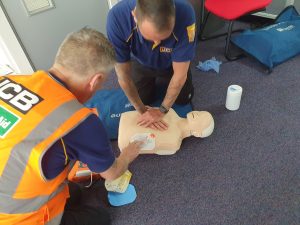
Education plays a vital role in changing behaviour. That’s why Abacus Training’s 2-hour CPR & AED course focuses on practical, hands-on learning in a supportive environment.
The course covers essential topics, including:
-
responsibilities and reporting
-
assessing emergency situations
-
dealing with an unresponsive casualty
-
resuscitation techniques
-
choking procedures
-
AED safety
-
defibrillation procedures
-
paediatric defibrillation
-
understanding AED functions
Because the training is highly practical, learners build real confidence. As a result, participants leave able to use an Automated External Defibrillator (AED) competently and effectively.
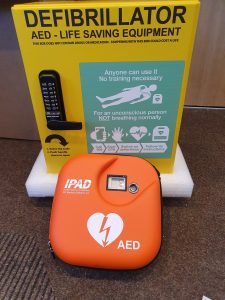
In addition, the course goes beyond AED use. It also provides vital training in CPR and choking response. Together, these skills empower learners to act quickly, safely, and confidently — whether at work or in the community.
👉 Learn more here:
https://abacustraining.co.uk/2021/11/10/basic-life-support-and-automated-external-defibrillation/
So next time you learn CPR or walk past a defibrillator station, remember one powerful message:
Bra off. Defib on.
Lives truly depend on it. ❤️
Recent Comments